






























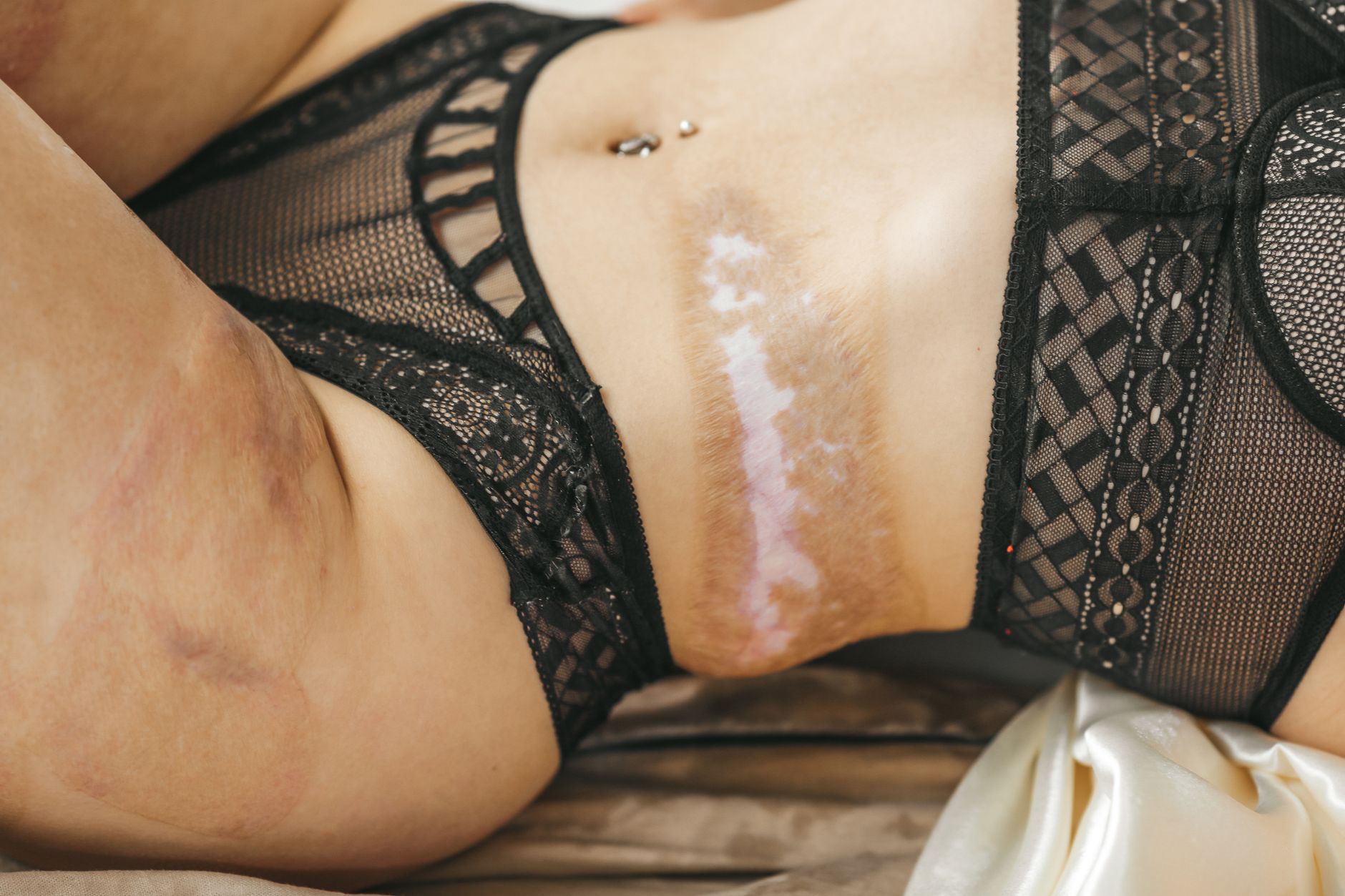
Photo: Alina Rossoshanska / Pexels
Stretch marks and scars are a natural part of skin healing and stretching, often resulting from rapid growth, pregnancy, or injury. While they rarely disappear completely, a targeted skincare routine using clinically proven ingredients can significantly improve their texture, color, and overall appearance over time.
Common Causes
- Rapid weight fluctuations causing the dermis to tear
- Pregnancy leading to abdominal skin stretching
- Growth spurts during puberty
- Surgical procedures, acne, or physical injuries
- Genetics and naturally lower skin elasticity
Key Ingredients That Help
Silicone
Creates a protective barrier over scars to lock in moisture, flatten raised tissue, and reduce redness.
Vitamin E
A powerful antioxidant that supports skin healing, deeply moisturizes, and helps fade the appearance of newly formed marks.
Rosehip Oil
Rich in essential fatty acids and vitamin A, it promotes cellular turnover and improves skin elasticity.
Bio-Oil Blend
A specialized mix of plant extracts and vitamins suspended in an oil base to improve the appearance of both new and old scars.
Recommended Routine
| Step | Product Type | Why |
|---|---|---|
| 1. 1. Gentle Cleansing | Hydrating Body Wash | Keeps the affected area clean without stripping natural oils, prepping the skin for treatment absorption. |
| 2. 2. Targeted Treatment | Silicone Gel or Scar Serum | Applies concentrated active ingredients directly to the scar or stretch mark to encourage collagen remodeling. |
| 3. 3. Deep Moisturization | Stretch Mark Cream or Body Oil | Improves skin elasticity and locks in hydration. Massaging the product in helps break down tough scar tissue. |
Recommended Products


Mistakes to Avoid
- Expecting overnight results; scar remodeling takes months of consistent care
- Exposing fresh scars to direct UV rays, which causes hyperpigmentation
- Applying strong active ingredients to open wounds or unhealed skin
- Skipping daily massage, which is crucial for breaking down scar tissue
When to See a Doctor
Consult a dermatologist if your scar becomes painful, itchy, or restricts movement. Seek medical advice for keloids, severe hypertrophic scars, or stretch marks that cover large areas, as you may benefit from in-office treatments like laser therapy or microneedling.
Related Guides
- Bobbi Brown Makeup & Skincare | BeautyCare Bag
- Essence Makeup | Affordable Cruelty-Free Beauty
- Garnier Skincare & Hair Care | BeautyCare Bag
- Best Anti-Aging & Wrinkle Treatments | BeautyCare Bag
- Skin Brightening & Glow: Best Routine for Dull Skin
- Anti-Aging Skincare Guide: Treat Fine Lines & Wrinkles

